Campus Complaints Are Real. Here's How SRM Solved Them Without Another Survey.
While researching for what was supposed to be just another article for Dhobi G, my teammate Guhan and I came across a statistic that completely stopped us in our tracks.
It wasn’t just surprising. It was disturbing. It didn’t feel like a line in a report. It felt like a punch in the gut.
And it made us both furious.
Time Is a Luxury
Think about what five free hours a day could mean.
You could read. Rest. Work on a side hustle. Learn something new. Travel. Spend time with your kids. Catch up on sleep. Do absolutely nothing without feeling guilty about it.
Five hours a day could change a life. But for millions of Indian women, those hours are already taken. Silently. Every single day.
They’re spent doing the things we often dismiss as “chores”: cooking, sweeping, laundry, folding, cleaning, ironing.
We’ve normalized it. We don’t question it. And we rarely measure it.
Until you look at the data.
The Unseen Numbers Behind the Work
On average, Indian men spend just 88 minutes per day on household work.
Indian women? 289 minutes per day.
According to the initial findings from the latest Time-Use Survey (January–December 2024) released by the Ministry of Statistics and Programme Implementation.
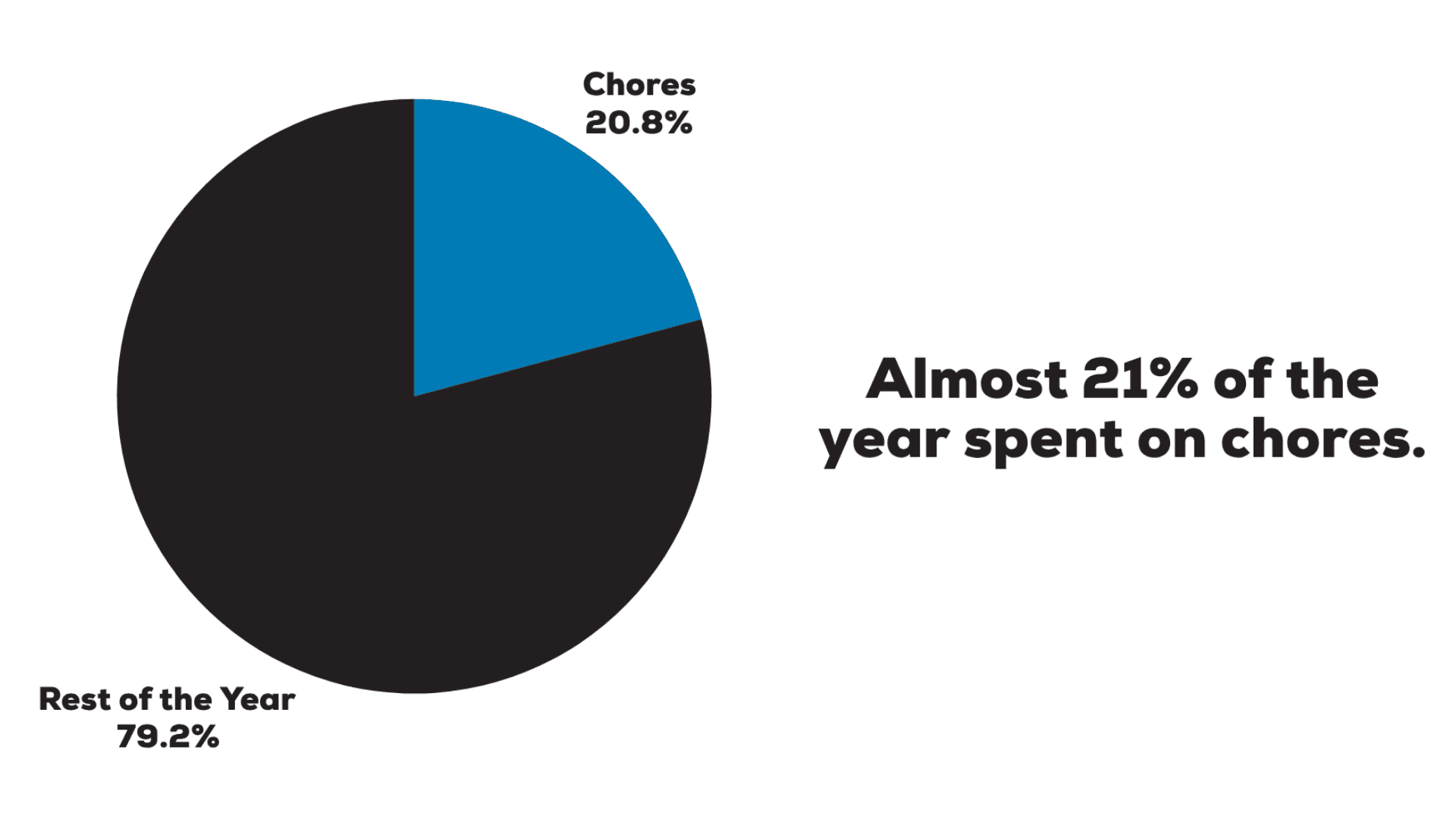
That’s nearly five hours daily. 1,800 hours per year. Or put another way: 75 full days of unpaid labour, every single year.
Seventy-five days that could have gone into a career, a business, a book, or even just some rest. Gone.
This isn’t about helping out at home. This is about a system that quietly expects women to give up their time without acknowledgement, support, or choice.
The Cost Isn’t Just Personal, It’s National
The consequences of this aren’t limited to one household. They ripple across society and the economy.

According to a study by the
According to a study by the McKinsey Global Institute, if women in India were able to participate equally in the workforce, our GDP could grow by 27%.
That’s not a small shift. That’s a massive national transformation.
But instead, what we see is the opposite.
We see women leaving the workforce when families expand. We see girls growing up internalising that unpaid domestic work is their destiny. We see generations of boys never being told that this work is their responsibility, too.
The result? Lost income. Lost potential. Lost innovation.
And a society that keeps half its population locked in a loop of invisible labour.
Where Do We Begin?
I don’t believe in pointing fingers without offering solutions. And while there’s no single fix for gender inequality, I believe there are three immediate, practical places to start:
1. Stop Treating Outsourcing as a Luxury
Hiring help for chores, especially laundry, is often seen as an indulgence.
But it’s not. It’s a time-liberating tool.
As a co-founder of a laundry service company, this is one area where I can contribute. We’ve built Dhobi G to be affordable, tech-enabled, and accessible, so that outsourcing laundry isn’t a privilege, but a simple, everyday choice for students, working families, and institutions.
Giving back just a few hours a week to women may not seem like much. But it adds up. And it matters.
2. Let Technology Take the Task
In a world-building AI that paints portraits and writes poetry, we need more tech that reduces everyday burdens.
Instead of an AI that makes art, we need AIs that do the chores so we can make art.
Tech that handles routine tasks, so people don’t have to. Let machines do more of the repetitive work, so people can focus on what really matters: rest, relationships, growth.
3. Normalize Equality, Not Sacrifice
Housework is not a gendered skill. It’s a life skill.
We must raise boys who learn to clean, cook, and care for their homes, not because they’re “helping,” but because it’s their responsibility too.
Schools, families, and colleges, we all have a role to play in teaching this from the start.
The Truth About Time
Time is not just a resource. It’s freedom. It’s power. It’s possibility.
And when we ask women to give up five hours of theirs every single day, we’re not just asking for chores to be done. We’re stealing their chances at rest. At growth. At choice.
A woman’s role is not to do laundry. Her role is whatever she chooses it to be.
Let’s build a world where that choice is truly hers.